 The Wall Street Journal has a great piece (9/9/06) on a new trend in Japan where TV ads are becoming part of the show (subscribe to the online Journal, it's got one of the best media sections). A big agency and large TV network have teamed up for this latest way to trick viewers into postponing the potty, relieving them from the TiVo and other tools of avoidance viewers have developed. The ads and mixed with content. And according to the article (WSJ doesn't allow links). You can't not pay attention because valuable parts of the plot are revealed while products are being featured. As reporter Amy Chozick writes it, "...In one scene, a woman sits in a cafe longing for a family. Then she notices a mother taking hers kids out of the back of a Toyota Sienta minivan -- a scene that lasts for a minute or so, giving viewers a clear view of the car's spacious interior. The woman imagines herself becoming the mother and enjoying the Sienta with the kids. Cue the commercial, where the same character later goes home to research "Happiness, Marriage, Minivan" on the Internet, a search that leads her to Toyota's web site." The blurring of art and commerce continues. This time as a reaction to high tech devices and alternative delivery sources that threaten traditional television. But what about the threat to artistic expression?
Context-Linked TV Ads: No More Bathroom Breaks
The Wall Street Journal has a great piece (9/9/06) on a new trend in Japan where TV ads are becoming part of the show (subscribe to the online Journal, it's got one of the best media sections). A big agency and large TV network have teamed up for this latest way to trick viewers into postponing the potty, relieving them from the TiVo and other tools of avoidance viewers have developed. The ads and mixed with content. And according to the article (WSJ doesn't allow links). You can't not pay attention because valuable parts of the plot are revealed while products are being featured. As reporter Amy Chozick writes it, "...In one scene, a woman sits in a cafe longing for a family. Then she notices a mother taking hers kids out of the back of a Toyota Sienta minivan -- a scene that lasts for a minute or so, giving viewers a clear view of the car's spacious interior. The woman imagines herself becoming the mother and enjoying the Sienta with the kids. Cue the commercial, where the same character later goes home to research "Happiness, Marriage, Minivan" on the Internet, a search that leads her to Toyota's web site." The blurring of art and commerce continues. This time as a reaction to high tech devices and alternative delivery sources that threaten traditional television. But what about the threat to artistic expression?YouTube Buyers: Mark Cuban Calling All "Morons"

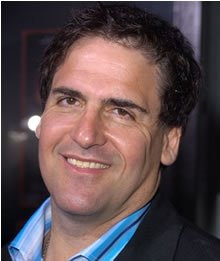 Mark Cuban, the Internet billionaire and wacky Dallas Mavericks owner says anyone who would want to buy YouTube is a "moron". A moron Cuban is not. No one has better timing as he proved when he unloaded Broadcast.com right before the Internet bubble burst. Now Cuban warns that anyone who buys YouTube will be "sued into oblivion". And that the only reason it hasn't happened so far is that there is no real money to go after. Cuban makes an interesting point. YouTube is setting itself up for fight after fight over rights. But they know that. That's why you're beginning to see them make digital rights deals -- the most recent, notable one with Warner Records. Cuban is not saying video clips are not a business -- just that making it a profitable and legal business is going to take more than a billion dollar purchase price. Don't be surprised if some mega corporation pays the price of ownership. The upside seems so sweet. And what do big corporations have so many lawyers on the payroll for anyway? I wouldn't be surprised if YouTube wound up spurring the resolution of what to do with rights management. The day is coming when "use" will be monitored seamlessly and the piper will get paid. If so, the record industry is back in business. See how fast they stop pushing CDs down their customers throats. The underlying question for a big mega corporation is: do you buy YouTube before a digital rights management and payment system is in place because once it is, the cost of purchasing YouTube could be a bargain at $1 billion.
Zune price: $249.99
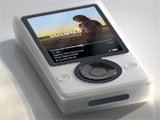 Microsoft is ready to launch Zune, its competitor to iPod, in November. The price has been set. This competitor to iTunes will be in place for the holiday gift buying season and the biggest and most anticipated challenge to Apple will be under way. But Zune doesn't seem to have enough different features to make a serious dent in iPod's domiance of the mobile music device market. If being able to share songs for three days wirelessly with others is important then this device rules. If. There is even some speculation that once a consumer downloads a Zune tune -- whether he or she shares it or not -- that it remains clogged on the hard drive. Only to be unburdened by an act of will -- deleting it. Each and every time. There is a reason second-to-the- market usually doesn't become the market leader. That's because the market leader is already busy being the market leader. Whether Microsoft will be satisfied with seconds remains to be seen. And seconds it's likely to be as Zune might have been a market leader had it gotten to market sooner. Having said that -- it's Apple's to lose not Microsoft's to win.
How to Lose The Next Generation
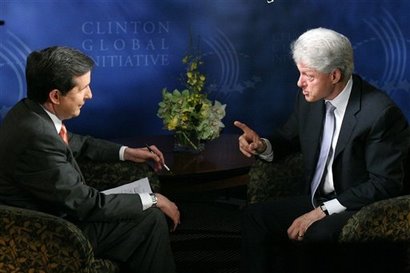 While traditional media complains that the Internet is responsible for its waning fortunes of late, you have to wonder if anyone is seeing the real problem. The latest example of how traditional media is their own worst enemy happened again this past weekend. Fox News Channel's Chris Wallace raised the hackles of Former President Bill Clinton in what Democrats call attack journalism and Conservatives call fair and balance reporting. Some right wingers say Clinton lost his temper on purpose to rally Democrats who are madder than hell and aren't going to take it any more. Whichever conspiracy theory you subscribe to, it was the same old sorry television that has been losing viewers for years now. TV news has reduced itself to gotcha moments run -- and rerun -- ad nauseum on one hand and the softening of news on the other (i.e., Katie Couric's new age rendition of Walter Cronkite). And, do you know any young adult who watches local TV news? They've been dumbing it down while the next generation has been getting smarter. TV news has all the short attention-span bells and whistles (laser effects, slick graphics, shakey camera shots, incomplete stories), nonetheless Gen Y has learned how to get their own news. To see it -- on YouTube. To read it -- on news and blog sites of their own choosing. Delivered when they want it. Ended when they've had enough. Then to discuss it through social groups. Me thinks traditional media complainith too much. It's not the Internet that's killing them. They are misreading the market -- not knowing their audience. No matter what your age, it makes you appreciate the Internet alternatives to the "broadcasters" who sully the legacy of the likes of Edward R. Murrow.
Media Gets It Wrong on Howard Stern
 Ad Age wrote a piece September 24 titled "Howard Stern's Ad Rates On Sirius Slump to Low of $5,000". Their point -- apparently -- that Stern's live-read spots sell to advertisers for between $5,000-10,000. The gist of the article is that Stern can't get the reported $30,000 he used to get when he worked for CBS/Infinity on terrestrial radio. To add some needed perspective: Stern is Sirius Satellite Radio. It's paying him $500 million plus stock incentives for selling Sirius to the public. So far it has worked. Sirius is closing the subscriber gap with rival XM. But news outlets have a problem with Stern. They confuse his show's content for his business savvy. Up to $10,000 for a live-read satellite radio commercial is amazing considering satellite radio is still the frontier -- that's 1/3 of the terrestrial rate card. Ad people cling to their ratings -- or lack of them in this case -- at their own peril. Look up. You don't need ratings to compare Stern's Sirius show with his CBS show. Consider the multitude of publicity, putting Sirius back on the map, the Letterman appearances. The ad community can only relate to things with their cost-per-point mentality. Perhaps that is why Internet advertising took off without them and now advertisers are rushing to jump on the bandwagon. And about those rumors that Stern will do his show (or "a" show) on terrestrial radio again the short answer would be -- not so fast. Terrestrial radio is on the decline with listeners (especially young ones) and can barely maintain an even growth rate in overall advertising. Satellite radio is new and every day is a growth day which means if you want to compare them, satellite radio is -- to use ad jargon -- selling "on the come".
YouTube Overpriced At $1.5 Billion
 The New York Post is reporting the price tag for YouTube is around $1.5 billion. Several media giants including News Corp, the owner of MySpace are reported to be interested, but not at that inflated number. YouTube is arguably the hottest toy of Gen Y right now. Even with the short life span of Internet start up companies these days the growth of YouTube seems assured through the 2008 presidential elections. Catching politicians looking stupid in an on-demand format should keep the interest growing until the polls close. Beyond 2008 there are many questions including the obvious: will the YouTube generation tire of seeing homemade video clips? Will they adversely react to paid advertising such as the type they'll see resulting from the recent deal with Warner Records? Will deeper content find a place on YouTube? YouTube is already getting many more competitors and even a poor competitor is a competitor nonetheless. Some music media insiders suspect that the great awakening is coming when a generation, a group of creative start up entrepreneurs and technology companies all finally start to realize that without outstanding content sites like YouTube will be reduced to simply being amateur television. Advice to the 22-year old founder of YouTube: Take $650,000 million and hold your nose. The window to sell to a traditional media company is growing shorter especially once they figure out that they have the content advantage after all.
Goodbye Facebook!
The sell off is coming with news that Yahoo is in serious discussions to purchase Facebook for an estimated $1 billion. The Wall Street Journal reports that Viacom and Microsoft were also interested in this student social network. You can't blame founder Mark Zuckerberg for taking the money, but you have to wonder if this doesn't spell the end to the Facebook fickle college students love. Some of my USC students say when Facebook takes on the qualities of MySpace, they're over it. News Corp purchased MySpace for $650 million and is in the process of monetizing it "big business" style. Facebook could become a corporate wanna be for Yahoo or whichever company wins it. This could be a very tricky acquisition. Facebook is not MySpace -- and students like it for that. Facebook says college, maybe high school -- certainly school. Students graduate from school. Could they graduate to MySpace or some other alternative? The social networking market is unpredictable. Right now the rage is video (YouTube, et al). Tomorrow, it will shuffle again. The start-up innovations of Gen Y that corporate baby boomers now covet could be their Trojan horse. Be careful what you wish for corporate America -- the future of social networks is uncharted territory and it may be difficult to stablize and monetize simultaneously.
Warner Catches the YouTube Virus
 Warner Records was not acting like a record label when it inked a shrewd deal with the wildly popular YouTube today. Warner was looking more like a viral marketer. Unlike Universal which is getting ready to sue YouTube unless it cracks down on copyright infringement, Warner is making love. YouTube comes up with a royalty-tracking system that will detect when YouTube videos are using copyrighted material. Warner can then review the videos and decide whether to let them play or reject them. Warner overcomes its copyright problem. Gets to monetize its videos through advertising. Even YouTube gets to make money that it sorely needs. YouTube is not awash with financing. There has been speculation that eventually YouTube would have to sell out to keep going. YouTube founders vow to keep operating independently. Whatever you believe Warner has finally cooperated with the inevitable. Warner beat Capitol to the decision even though Capitol was considering some kind of relationship with YouTube. Instead of fighting the wave, Warner is going along with it. Does that sound like a record label to you or a company formerly known as a record label pushing itself into the future.
Free Satellite Radio Subscriptions For Everyone in College
 My friend Lee Abrams barely leaves campus and I am spending his money. XM's Chief Creative Officer was the featured guest at USC Thornton School's debut of its "Hot Topics" program today. Abrams was warmly received as he explained the mission of XM's version of satellite radio. What was somewhat surprising was the curiosity on the part of students. It's almost as if they had either not considered satellite radio as an option for them or let price discourage them from getting it. Cost was a factor -- the fact that it costs anything at all. Still, from the wide ranging discussion that ensued Gen Y could be an eventual market for satellite operators IF they develop a reasonable strategy for making satellite radio cool and easy to access. In the absence of viral marketing -- the grassroots type that helped spread the word on Facebook, MySpace and YouTube -- another approach should be sought. Gen Y is a voracious consumer of music media. The time has arrived to do something drastic (and smart): offer a student pass to satellite radio for bona fide four year college students. They buy the device and get the service throughout college -- a time of financial challenge to many. Hook them early and often and the four-year investment will pay dividends as soon as they graduate and get a job as they clamor "I want my satellite radio".
What If Apple Got Into The Record Business
 It would make love not war with its customers like Apple does in everything else. And it would need a name other than Apple Records (in deference to the former Beatles' label). That aside, Steven Jobs would either not join the RIAA or the RIAA would wish he had never joined. Music would be more democratic. The community of music lovers Apple would court probably would decide which songs became "Tasmanian Go-rillas" (to borrow a phrase the FMQB music tipsheet publisher Kal Rudman used to use to describe a hit record). Hits would be determined by a different hierarchy -- perhaps like YouTube video clips are. Apple would be less obsessed with current record label minutia because its mission would still be (as it is currently) to sell hardware. The music would be a means toward that end. Not a bad thought for the Big Four record labels today -- use the music to sell something else. And the real test of whether an Apple record label would really be different is the decision it would have to make about digital rights management for new artists wishing to be part of the Apple music machine. Probably against DRM -- why not? Apple's business model is to use music to sell something else. And if past success is any indication, Apple would likely sell a lot of "something else".
Fidelity Not Hurting Ipod
 The lack of CD quality sound has not hurt Apple in its five years of dominating the mobile music device market. Of course there are a minority of audiophiles who complain, but not enough have resisted the many incarnations of the ubiquitous iPod. When Apple's iTV gets up and running -- probably in the first months of 2007 -- Apple will be defying high definition, digital quality and all the things the industry thinks consumers hold sacred. Apple is wagering that convenience will trump fidelity. And they are probably right. Making a consumers music, movies and video portable and giving them a chance to play it seamlessly on a large screen (with the addition of a $300 device) will enable them. iTV will not kill the DVD market. In fact, it will probably stimulate it assuming DVD pricing becomes attractive. Industry executives may someday realize that iPod use is a convenient, Low-Fi form of storage first and foremost. It hasn't yet replaced CDs even as it continues to gain popularity. Record labels have hurt CD sales more than Apple by stiff pricing and by offering a weaker stable of releases -- the result of corporate cutbacks resulting from consolidation and inability to see digital downloading as a sales tool (whether free or paid).
Zune-y Tunes
 The new Microsoft/Toshiba competitor to Apple's iPod and iTunes -- Zune -- is betting a lot on this simple concept: users will be able to wirelessly send other Zune owners any song. The recipients can listen to the song for up to three plays within three days. Then, the recipients must buy the song if they want to hear it again. Microsoft and the record labels see this concept as wireless "street teams" and it looks good on paper. It's tough enough to have to compete with iPod in design, functionality and now in concept. The question is -- will it fly with mobile music device users given that they will be able to share their music in such a limited way? And will it be enough of a lure to differentiate Zune from Ipod? Or, is this a fantasy of the record labels to go along with whatever fantasy Microsoft might have about taking back the mobile music market after letting Apple get a five-year head start.
Another Big Radio Mistake: The Big Stay Bigger And Sell The Smaller
 It seems pressure from Wall Street is making some of the big radio companies think about selling more radio properties. CBS Radio is in the process of selling off its smaller, less essential markets and stands to raise a lot of cash and no doubt please their real bosses -- Wall Street investors.
Now analysts are reportedly suggesting to the largest radio company, Clear Channel, that it might want to think about selling off some of its smaller markets. You know, clean up the balance sheet. Mind you, these are the same Wall Street types who helped finance radio consolidation. Once created, many of the resulting companies found that they couldn't run five, six or seven stations in a market. That is, even when they dominated the cities they couldn't live up to the expectations.
Excuses were many. First it was the economy. A declining ad picture. The perception by listeners of too many commercials led Clear Channel to its questionable strategy of cutting commercial loads and making a big deal about it. Cutting commercials -- a good thing. Screaming about "less is more" when no advertiser likes the word less unless its attached to lower rates -- a bad thing.
While all this was going on radio's next generation of listener was getting happily involved with their online lives -- Internet, Napstar, social networks, YouTube. Even Howard Stern bailed out on terrestrial radio for satellite prompting the New York Times to write the latest article about the declining state of radio.
Young listeners are gravitating toward all things interactive. They still listen to radio and it still has some influence on their musical tastes but all music deals seem to be negotiated through a computer, peer-to-peer file sharing, iTunes, mobile devices and word about new music is spread not from djs to listeners anymore but by consumer to consumer through social networks like MySpace and Facebook.
What's ironic is that these mega corporations that have presided over the decline of their business while owning more of it than ever before are about to make another big mistake -- selling off smaller markets. It's the smaller markets that still know that radio is local. Ask a young adult what they want from radio and they go way beyond fewer commercials. The magic of radio is that it used to be local -- and still is in smaller cities. It's no surprise that misdirected advice from Wall Street is leading these conglomerates to conclude that big is better. Chalk up another critical mistake for radio while it waits around for HD technology to save it -- again, another critical mistake in a once proud business that sold its soul to Wall Street. Time to go private.
Get The Feeling FaceBook and MySpace Don't Get It?
Facebook is still eating humble pie after a privacy meltdown of epic proportions last week -- one that saw and uprising of angry users. The apology. The humility. Yet all Facebook did was give members a little more control, but their changes are potentially still out there as unpopular as they are. Now, Facebook has "MySpace envy". Wants to expand the community. Of course, it's not going to make the mistake of letting all those new regional members mixed in with its college community -- at least not yet.
And MySpace feels like it is becoming more of a portal than a social network. The next generation can be very forgiving especially since Facebook and MySpace are their main social networking tools and they are not easily discarded without a suitable replacement on the horizon. But this generation is also fickle and ripe for change. If another entrepreneurial start-up comes along and understands privacy, community and the importance of not monetizing the site by making it feel and look like a giant advertising vehicle, I'm betting it has a great chance to emerge as the next social network. Fool this generation once and shame on you. Fool them twice -- well, they're too smart for that.
And MySpace feels like it is becoming more of a portal than a social network. The next generation can be very forgiving especially since Facebook and MySpace are their main social networking tools and they are not easily discarded without a suitable replacement on the horizon. But this generation is also fickle and ripe for change. If another entrepreneurial start-up comes along and understands privacy, community and the importance of not monetizing the site by making it feel and look like a giant advertising vehicle, I'm betting it has a great chance to emerge as the next social network. Fool this generation once and shame on you. Fool them twice -- well, they're too smart for that.
Apple's iTV Strategy
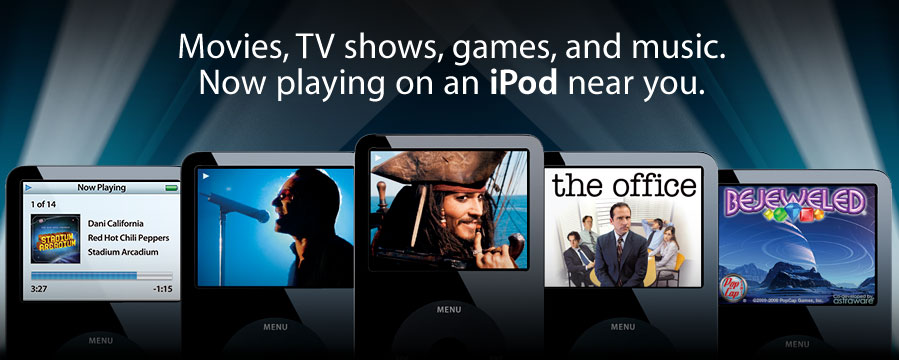 Steven Jobs couldn't keep the secret in advance of his San Francisco debut of a revamped line of iPods and more importantly -- it's gonzo entry into the movie delivery business. Apple's new iPods freshened the line, but the most significant thing was not just the fact that Apple is selling movies today but that early in 2007 it will debut a device that its hopes will shuffle the TV viewing market -- iTV. You have to read between the lines to see the rewards and risks Apple is taking.
iTV is expected to sell for $299 and it is designed to allow consumers to buy movies from the iTunes store for seamless viewing on television screens. Other companies have tried with little success. If Apple succeeds -- and they have a good chance at it -- the media market will experience significant change again with repercussions for many companies. The customer will be able to hook a computer-like device into onto its television or home theater through audio/video cables making it possible for them to access their movie and video files as they are displayed on their TVs. The system uses WiFi wireless technology and infrared remotes that attach to the TVs.
Here's what to watch: A ruckus will be raised that Apple is going to stifle the movie DVD market predominated by Wal-Mart and other discounters -- this in spite of the fact that the most popular video offering sold on iTunes -- The ABC show "Lost" -- sold more hard copy DVDs in its second season than it did the first (when it was not available on iTunes). Are the record labels listening?
Media sells media. It doesn't inhibit it. That is, the more media that is offered to the public, the more the public seems to buy. Could it be that the record labels are barking up the wrong tree when they fight their fastest growing delivery system to consumers -- digital downloads? Shouldn't they be knocking themselves out feeding the media frenzy which has been awakened by digital access? How about making songs available online for preview -- in full and for a limited number of repeats. Start there. Give some music away. The next generation will respond by -- well, buying more. Apple gives its music away so to speak by basically only profiting from hardware sales. Apple seized control of digital download pricing from the labels because it understood the business -- the risks and rewards.
Jobs is a master marketer. Now he is selling new release movies for $12.99 to start and then from $9.99 to $14.99 depending on the age of the movies. That is cheaper than the price of just-released DVDs (around $18). Yet selling movies is still a break-even situation for Apple. Feed the frenzy.
So it is that Apple's entry into selling movies is tantamount to a record label giving some music away to sell something else, say, more music, CDs, combos, etc.
Television is thinking like record labels and radio (another laggard in the digital world). TV has enough trouble with TiVo and DVRs scaring the hell out of its advertising base. Now iTV is arguably more competition for them. And You Tube is a passion among the next generation leaving a lot less TV viewing time available.
Is it lost on anyone that a computer company is defining the market for several important mediums? And Apple boldly shouts out its strategy and few, if any, competitors take heed. To take back control, media executives are going to have to think more like Jobs and take more risks. Fighting to resist change is energy poorly expended. Bold initiatives -- like embracing digital downloading and rethinking the basics of content delivery -- can set a profitable new path.
Or as Apple would say, "think differently".
Why Katie Couric Matters ... Sort of.
 The next generation seems particularly indifferent to the rise of Katie Couric to anchor of CBS Evening News.
It's nothing personal, I'm convinced. It's just that they don't watch network TV newscasts. They don't TiVo them, either which is why CBS hired a 49-year old reporter to read news to a largely older audience.
I was recently interviewed for an article in the Baltimore Sun on the importance of music to the new CBS newscast. Music and sound effects, special effects and all the visual and audio techniques producers can develop seem to matter too much to television. It wasn't lost on any pundits that the composer who wrote the theme for the Titanic was commissioned by CBS News to write the theme music for the new program. As a reporter for the LA Times pointed out -- too bad it only lasted ten seconds.
Katie Couric symbolizes a generation gone by -- not tomorrow's next generation. They get their news on the Internet when they want it and look at video when they decide. It's all available on YouTube or CNN or -- well, you get the idea.
When will traditional media finally see the potential of building audio, video and text together and simply call it content. When will they get over the fact that they may be a visual medium but they can also do text. That they can be providers of content for mobile devices because mobile content is the future and traditional media is like an oldies station -- yesterday.
Katie Couric matters because CBS made her $15 million a year salary and high profile rescue of CBS Evening News ratings the focal point of the state of traditional media. Yes, music matters -- of course it matters but so does the available pool of viewers and in this case the next generation is taking a pass on Katie Couric's much publicized experiment. They don't come home for dinner. They don't watch the nightly news after dinner. They don't even eat dinner all the time -- at least not a dinner time.
They want it their way -- on-demand, online and increasingly mobile. The first conglomerate to figure this out will do a top-rated, legitimate news channel on YouTube where an entire generation is congregating and they will start a whole new revolution.
XM's Lee Abrams to Speak at USC
 My friend Lee Abrams has agreed to come to Los Angeles and talk about satellite radio, the future of mobile music media and take questions from students, professors, graduates and the media.
 Abrams kicks off a USC Thornton School of Music series of new events known as "Thornton Hot Topics" in which cutting edge issues relating to music media can be discussed. Nothing is off limits. Lee is a very creative guy -- a thinker who has distinguished himself in the terrestrial radio field for many years.
When Abrams decided to leave terrestrial radio for satellite radio -- before most of us knew what satellite radio was going to be and well before they had their first subscriber -- it certainly got my attention. Why is this well-respected programmer defecting to the evil world of satellite radio? For one thing he was a man ahead of his time. And this opportunity to hear him and talk with him will give some new perspective to the future of mobile media.
I will ask Lee about the Internet and how it fits in with satellite radio. I want to know if Abrams thinks satellite operators missed their chance to really really reinvent radio. Lee will also have some insights into what radio stations are doing to alienate young listeners and I'm sure he's got some advice for record labels about music downloading and the decline of the CD. What would you like to ask Lee Abrams? (Post a question below).
The Lee Abrams "Hot Topics" event takes place Monday, September 18 at 12 noon in ASI auditorium. You must reserve a seat and can do so by emailing scmusind@usc.edu. Feel free to invite interested friends from other USC schools if you think they'd have an interest in this topic. Seating is on a first come basis.
How Facebook Saved Face
An online mutiny this past week brought Facebook to its knees and gave a scary first look at how tenuous the world of cyberspace can be. Take notes, MySpace. Your parent company News Corp. paid over $600 million for the chance to be the social network and it can all go away at the click of a mouse.
Facebook founder Mark Zuckerberg apologized in a letter posted to members by saying "We really messed this one up." How?
On Tuesday, September 5, Facebook implemented RSS feeds. As one student of mine said, "we like to spy on people but this is too much". The RSS feeds alerted friends to changes in members' profiles -- a radical departure. Facebook got it wrong when it thought its social community would like such a notification system when they were used to making changes and having the changes seen in time -- "the old fashioned way" -- when visitors stumbled across them. Facebook execs were caught off guard.
Two days later Facebook admitted its mistake. Does this scare you? It scares me to think of how quickly the social networking masses can revolt. But Facebook did a good job mopping up the damage. And much can be gleaned from this close-call:
Facebook founder Mark Zuckerberg apologized in a letter posted to members by saying "We really messed this one up." How?
On Tuesday, September 5, Facebook implemented RSS feeds. As one student of mine said, "we like to spy on people but this is too much". The RSS feeds alerted friends to changes in members' profiles -- a radical departure. Facebook got it wrong when it thought its social community would like such a notification system when they were used to making changes and having the changes seen in time -- "the old fashioned way" -- when visitors stumbled across them. Facebook execs were caught off guard.
Two days later Facebook admitted its mistake. Does this scare you? It scares me to think of how quickly the social networking masses can revolt. But Facebook did a good job mopping up the damage. And much can be gleaned from this close-call:
- Admit a mistake quickly and emphatically as Dale Carnegie used to advise.
- Never take your audience for granted. P&G and other product companies spend huge amounts of money on market research -- and even then -- they have lots of product failures. Facebook didn't test. Didn't ask. It's a formula for disaster in social networking.
- Young people want control of their social structure. They don't appreciate "big brother" type behavior.
- Social networking is a slippery slope. Lose the goodwill of your community and you lose everything. Social networking could be some big money some day so you do the math.
Sirius WiFi Satellite Radio -- an Idea Whose Time Has Not Yet Come
 It's nice to see that Sirius Satellite Radio is getting into the Internet delivery business with the sale of a new live portable receiver known as The Stiletto. Great name. Great device. Unfortunate timing. The hefty $349.99 price comes with the promise of listening by satellite or WiFi -- at home, in the car (kits sold separately -- ouch!) and the disappointment that you'll have to wait a long time before universal WiFi is available. The new device is intriguing. The SL 100 allows for 6 Hour Recording Blocks. Software updates can be done via WiFi connection allowing Mac and PC users to easily update without using a computer.
The good news is that this satellite provider realizes that it must be in the Internet delivery business -- that's something more than a lot of terrestrial radio consolidators seem to know. The company has trademarked this non-satellite service as SIR -- Sirius Internet Radio. The future is on the Internet and will be delivered by mobile device. Satellite delivery is so -- 90's. Credit Sirius with getting it -- at least now. But Sirius can't do much about the massive infrastructure that it will take to make this world WiFi capable -- and that is the hang up.
Ironically, the company that developed the Stiletto -- Zing, was founded by former Microsoft and Apple developer Tim Bucher. Bucher has a lawsuit pending against Apple alleging wrongful termination by Steven Jobs among other things. Does this mean that Bucher has come back to bite Steven Jobs in the -- iPod? Not likely.
It's hard to know what Apple will do next, but word is that the next generation iPod will have enhanced video capability to better present movies that Apple will simultaneously sell -- likely for varying prices (Oh God, this means the record labels will go at it again to fight for variable pricing of music -- something that Jobs has refused in the past).
Nonetheless, this new Internet technology that Sirius is embracing shows why Steven Jobs is still the master in innovation, marketing and, yes -- timing. He's not likely to enter the world of WiFi until WiFi enters the world of more consumers. Satellite Radio has little option but to look beyond the bird and wait.
Why MySpace's Music Store Deserves Watching
 The single-most visited Internet web address -- MySpace, the NewsCorp online venture, is going after Apple's iTunes. Many have tried and failed as iTunes commands a 70% share of the digital music market. The big four major record labels are no doubt rooting for this attempt to break Apple's stranglehold over them.
SpiralFrog announced their new plan to launch a free music
download service supported by advertising by the end of the year. Many see SpiralFrog's approach as "same-old, same-old" (see comments to separate post). But the MySpace challenge -- by no means a slam dunk -- is more intriguing.
On the surface MySpace claims the music of nearly 3 million bands is available on their social network. MySpace gets a "small" distribution fee -- that fee was not determined at the time of the announcement. Buying digital downloads should be popular with MySpace addicts. But what NewsCorp really wants is a piece of Apple's iTunes market. And the lure to record labels is the ability to offer variable pricing -- something Apple rejected earlier this year when it slammed the door on the record industry's attempt to alter the fixed-priced 99 cent per tune, Apple's "magic number".
The labels would likely love MySpace's price-your-own music strategy. What they won't like is the lack of DRM protection. Ironically Snocap will manage the e-commerce business (Snocap provides digital licensing and copyright management under founder Shawn Fanning, the one who originally launched the music piracy revolution under Napster I). Inside sources close to Reuters news service say EMI Group and MySpace have had discussions. EMI has reportedly had no comment.
MySpace would have to offer DRM protection to win the majors over. And if MySpace eventually has DRM protection in mind, it will have to carefully navigate the fragile mind-set of today's youth generation many of whom feel music should be free or cost next to nothing and once they factor all that in -- voila, they have iTunes.
Subscribe to:
Posts (Atom)